
29 August 2026
Corticosteroid injections before shoulder surgery - what's the harm
A review of Gilat et al, JSES 35 (2026): 1860-9, on the dose-dependent association between pre-operative corticosteroid injections and complications after anatomic and reverse shoulder arthroplasty.
JSES 35 (2026): 1860-9 Gilat et al
Interesting article that I read in this month's JSES journal. We all use corticosteroid injections for diagnostic and therapeutic purposes, but actually the harm it can do has not really been looked into. This is a study done in the USA. It is retrospective and looked specifically at complications following either an anatomic shoulder replacement or a reverse shoulder replacement with regards to an association with preoperative corticosteroid injections.
What did they study?
The study is retrospective and used an insurance claims database from 2010 to 2022. It looked at almost 125,000 patients and used unmatched and matched patient cohorts. It compared outcomes at 90 days, one year, and five years.
There are obviously limitations to utilising a database like this which relies on administrative claims data and a lack of detailed clinical notes and exactly what the timing and dosage of the steroids given were, but nevertheless, it does provide some fairly robust data. Essentially this database includes patients insured from the time period stated and contains approximately 165 million unique patients with orthopaedic diagnoses. Clearly in a country where private healthcare insurance is routine and normal, these sorts of databases can be utilised, albeit with some limitations.
The database was interrogated and almost 125,000 cases of shoulder replacement were included, where almost 34,000 received at least one intraarticular corticosteroid injection prior to the procedure. They looked at results of those who'd had no injections, and compared it with those who'd had 1-2, 3-4, or more than 5. The median patient age was 71 and there was a slight preponderance to the female population (58.2%).
What did they find?
Statistically significantly patients who received a greater number of corticosteroid injections were more likely to have multiple medical comorbidities, such as COPD., heart failure, kidney disease, diabetes, etc. This makes sense as we would be more likely to offer a steroid injection to those who seemed at a higher risk of anaesthetic due to their medical comorbidities.
For every time frame investigated, the complication rate was higher for pre-operative steroid use. Rates of post-operative stiffness, likelihood of revision surgery, nerve damage and cuff disease were all higher in a dose-dependent manner. This didn't hold true for infections however, which was surprising to me.
The more steroid injections a patient had had pre-operatively, the more likely they were to have a complication.
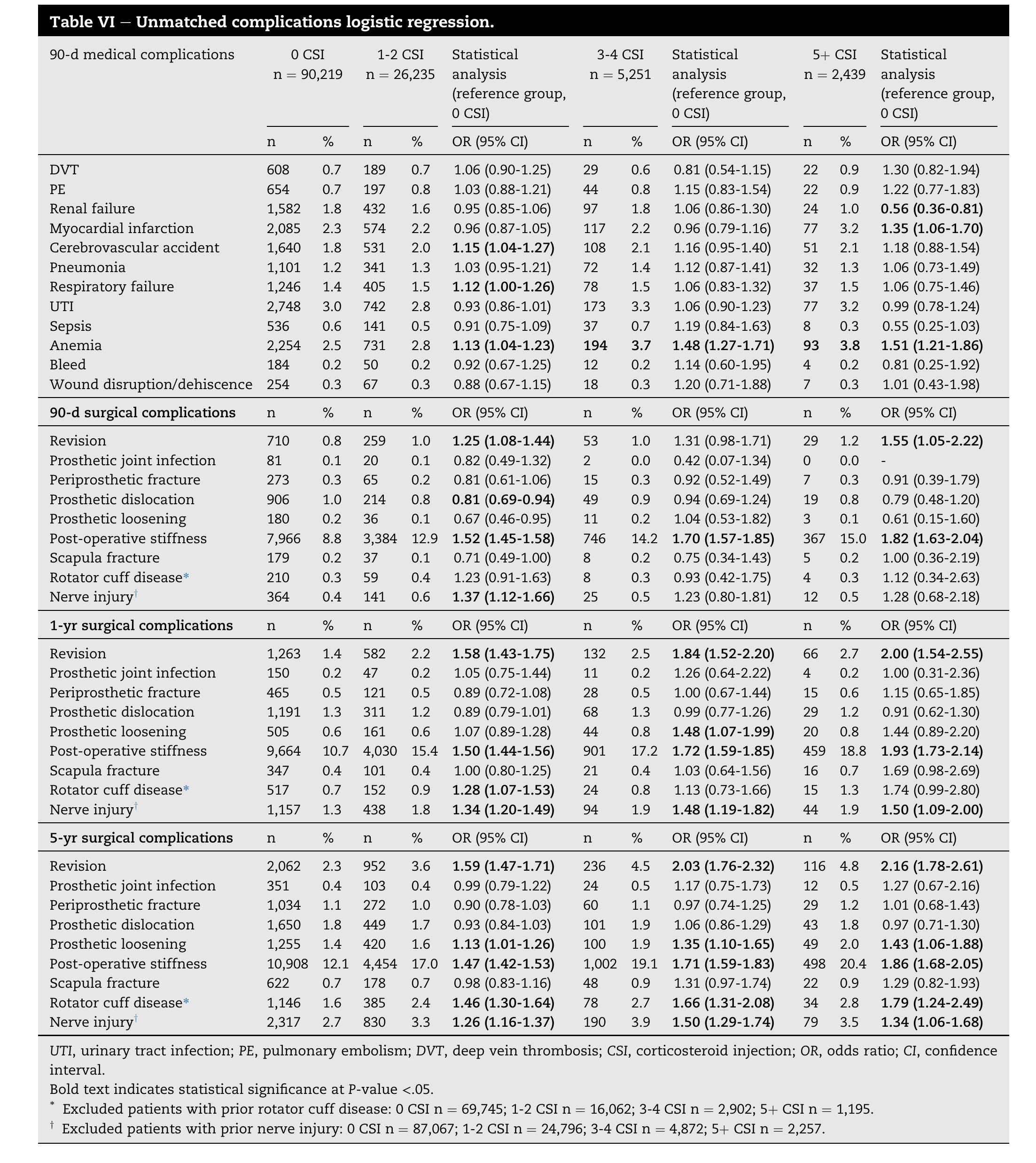
Because of the high number of patients included in the study, the overall impact is low, but still significant: the number needed to harm is 71.4.
The limitations of this study, are the retrospective nature, the database used, and questionable accuracy of clinical information. What is documented as an intra-articular injection, may well be a subacromial space injection, an ACJ injection or a GHJ injection. Whether this matters, I'm not sure. It also does potentially support the already clinically known detail that articular steroid injections have effects limited to the joint and rarely have any systemic issues, by "an absence of a significant association between [steroid injections] and systemic medical complications".
Will it change my practice?
So, will this study change my practice - in a word, yes. I think we have a fairly liberal use of steroids in our practice - not always bad, but useful to really stop and think about the effects if a joint replacement is to be considered in the future. Also, the association with subsequent nerve injury was interesting to me, and makes me even more reluctant to suggest an injection for symptoms such as medial epicondylitis (Golfer's elbow) where the ulnar nerve is in such close proximity. Corticosteroid injections are used fairly aggressively in primary care and by therapists without even plain film radiographs, which I have concerns about, but this article should not be dismissed at all. In short, steroid injection has a role in diagnosis and treatment, but perhaps we need to be slightly more cautious and really counsel patients on the possible harms before undertaking these procedures.
Read more
Written by Miss Aparna Viswanath, Consultant Shoulder & Upper Limb Surgeon. General information only, not individual medical advice.
Back to all articles