
31 August 2026
Surgical Ergonomics: Why One Size Doesn't Fit All
Part 1 of a series on surgical ergonomics: why operating setups and instrument design still assume one type of surgeon, and what that means for musculoskeletal health, inclusion and patient outcomes.
Part 1 of a proposed series.
Part 1: Why Ergonomics Matters
Most of us spend at least part of our working day compromising our musculoskeletal health - sitting at a desk with the chair at the wrong height, looking at a screen which at the wrong angle, lifting awkwardly or repeating the same movement over and over again. Surgeons are no different. We compromise by not having the operating table at the right height, the monitor at the right angle, or by wearing surgical loupes which force us to strain our neck. What's surprised me is that as many as 84% of orthopaedic surgeons have had musculoskeletal issues at some point during their career which was in part due to the conditions and instruments we operate with (Schlussel and Maykel 2019 DOI: 10.1055/s-0039-1693026; Epstein, Sparer et al 2018 JAMA; intuitive.com ergonomics).
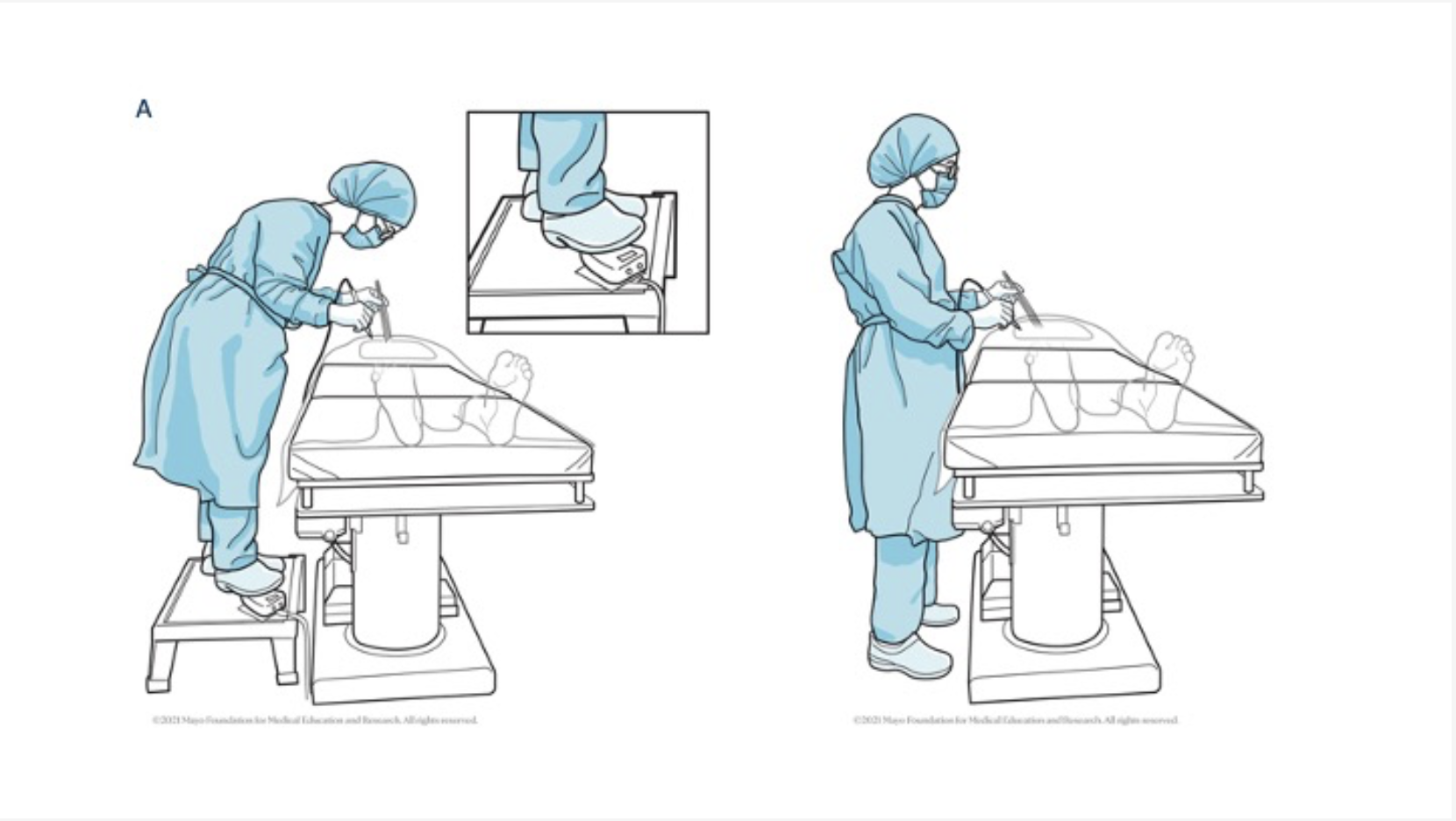
Ergonomics levels the playing field - a bit!
Traditionally instruments appear to have been designed for one type of orthopaedic surgeon. And by that I mean, one stereotypical surgeon - tall, strong, usually White male and right handed! Stereotypically they have large hands, and therefore instruments were designed for large hands and large arm spans. So when orthopaedic surgery started diversifying (and there's still a long way to go!), surgeons who had smaller hands, were left handed or maybe didn't have the arm span, all had to overcome their difficulties by working harder to make those available instruments work for them. That makes people feel like they don't belong. That makes people who don't fit the stereotypical mould, have to work doubly hard to get the same results. And the results matter, because it's a patient's outcome, it's a patient's function, it's a patient's quality of life. Having instruments that accommodate different hand sizes allows surgeons to work more comfortably and efficiently, with less need to compensate physically. And we all do better when we feel included.
EDI and ergonomics in the UK
A lot of work has been going on for a few years in the UK, mainly driven by efforts of lots of surgeons who recognise how hard they've had to work with instruments simply not designed for their body type. The BOA (British Orthopaedic Association) has an "ergonomics for the diverse workforce" update and an inclusive orthopaedics initiative. What's clear to see is that although these issues affect everyone, they disproportionately affect women. In the USA, there is a surgical ergonomics committee as part of their orthopaedic association with a conference each year featuring initiatives to try and improve the current problems. My role in BESS (British Elbow and Shoulder Society) at present (2025-27) is as EDI lead (equity, diversity and inclusion) and through that role, I'm trying to focus energy into ergonomics as a route to help with inclusion and belonging. This isn't just an abstract EDI interest for me. I'm considerably shorter than the average orthopaedic surgeon, and throughout my career I've had to think about operating-table height, instrument length, reach and positioning in ways that many of my taller colleagues simply haven't had to. That experience has led to my own work looking at surgical ergonomics, particularly how instrument design and operating setup affect surgeons of different heights and body proportions.
Over the coming months I'll use this section to explore some of these issues in more detail — from operating-table height and instrument design to hand size, reach and the physical demands of surgery — and look at what relatively small changes might make surgery safer and more sustainable for a much more diverse surgical workforce.
Image reference
Image reproduced from Surgical Ergonomics: How and Where to Start? - Hallet, Alam and Halbeck, BJS 2024.
Written by Miss Aparna Viswanath, Consultant Shoulder & Upper Limb Surgeon. General information only, not individual medical advice.
Back to all articles