When the noise does not matter
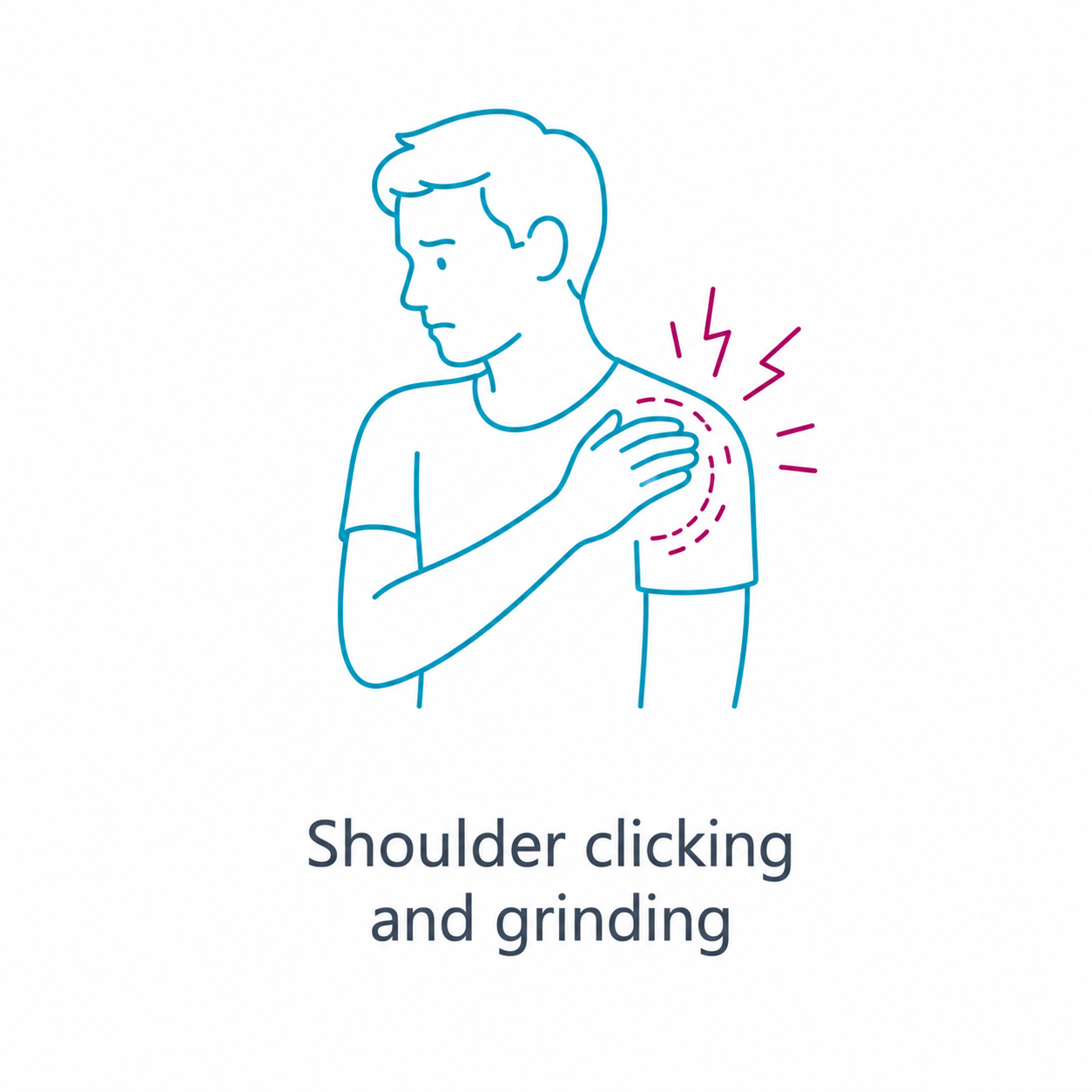
Sometimes the shoulder simply produces painless clicks as tendons or muscles move over bony prominences. If there is no pain and no loss of function, this is often a normal finding and does not require any treatment.
Occasionally the noise comes from the shoulder blade moving over the rib cage rather than from the shoulder joint itself. This is known as scapulothoracic crepitus, or 'snapping scapula', and is usually managed without surgery.
When clicking is painful
Painful clicking may occur for a number of reasons. A SLAP tear, an injury to the cartilage at the top of the shoulder socket, or an unstable long head of the biceps tendon can produce painful clicking or catching, particularly during overhead activities or throwing sports.
Patients who have previously suffered a shoulder injury or undergone surgery may occasionally develop loose bodies within the joint. These small fragments of cartilage or bone can become trapped during movement, causing painful catching, locking or sudden episodes where the shoulder feels as though it momentarily sticks.
A grinding sensation, sometimes described as crepitus, is more commonly associated with arthritis, where the smooth cartilage lining the joint has worn away. In these situations the grinding is often accompanied by stiffness, reduced movement and pain.
Clicking can also arise from the acromioclavicular (AC) joint, particularly after a previous shoulder separation. Some patients notice the joint moving or clicking when lifting the arm or carrying heavy objects. Although this can occasionally be unsettling, many AC joint injuries settle without surgery and can often be managed successfully with physiotherapy and activity modification.
Finding the cause
The most important step is identifying which structure is actually responsible for your symptoms. This starts with a careful history and examination. Depending on the findings, simple X-rays, ultrasound or MRI may be useful, although imaging is not always necessary.
Treatment depends entirely on the underlying cause. Many patients improve with reassurance, physiotherapy and simple activity modification. Others may benefit from injections, and a smaller number of patients with structural problems such as unstable cartilage, loose bodies or significant tendon injuries may benefit from keyhole surgery.